Health · 5 min read · 4 Oct 2026
Kachi ghani vs refined oil: what's the difference?
Why our grandparents' kitchens never had refined oil, and what changes when you switch back.
Two generations ago, cooking oil in UP meant one thing: sarson ka tel from the local kolhu. Refined oil arrived later, sold as lighter and more modern. Here is how the two are actually made.
How kachi ghani oil is made
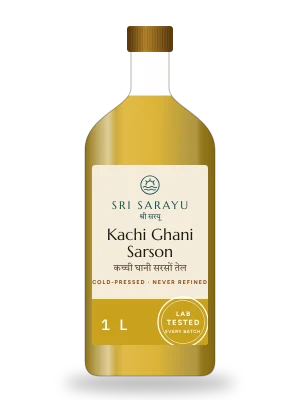
Seeds are crushed slowly in a press (a ghani or kolhu) at low temperature. The oil is filtered and bottled. Nothing is added and nothing is taken out, so it keeps its natural colour, smell and taste.
How refined oil is made
Refined oils are usually extracted at high heat or with solvents, then neutralised, bleached and deodorised to remove colour and smell. The result is a clear, neutral oil with a long shelf life.
What changes in your kitchen
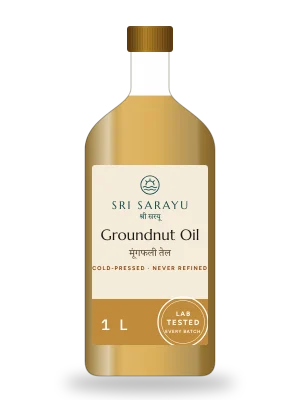
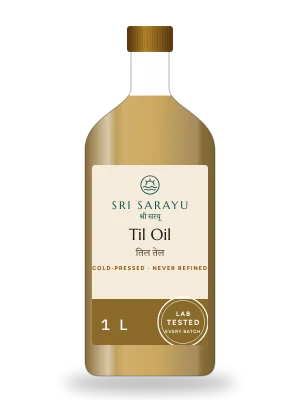
- Flavour: cold-pressed oils taste of their seed. Mustard oil is pungent, groundnut oil nutty, til oil earthy.
- Use: use mustard oil for North Indian cooking and pickles, groundnut for frying, til for South Indian tempering and dressings.
- Storage: cold-pressed oils have a shorter shelf life. Keep them away from heat and sunlight, and finish an opened bottle within a few months.
Any oil is still fat, so use it in moderation. If you have a health condition, ask your doctor which oils suit you.
By the Sri Sarayu kitchen team